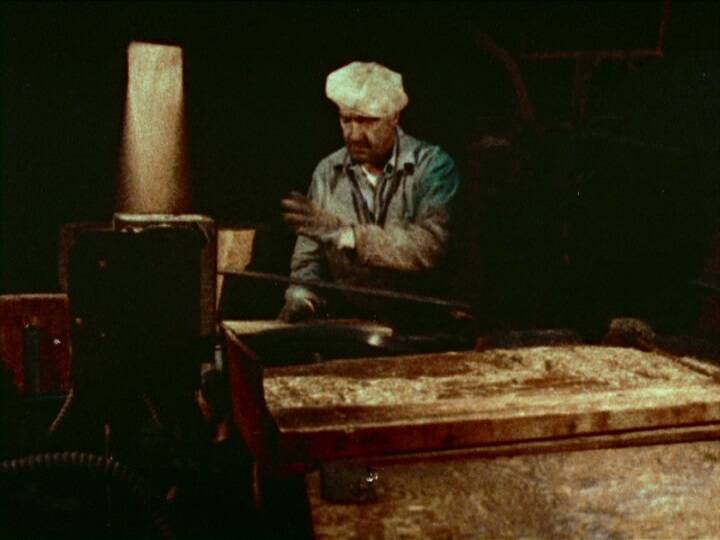
In the late 1970s, Charles Gustafson, a filmmaker enrolled as a student at Evergreen State College in Olympia, made “Cuts” a remarkable film about work in cedar shingle mills. Much of the filming was done inside the M.R. Smith Shingle Mill located on the shores of Lake Pleasant. Of the local men who were interviewed in this 38-minute documentary, few of them had all of their fingers, and many of them were missing a whole handful. While difficult to watch at times it is an eye-opening, realistic look at a profession that involved hard work and hard living.
Matt R. Smith was a prominent lumber broker in Kansas City in the early 1900s. His son Paul would eventually own the Lake Pleasant mill, which was constructed in the early 1940s, and a number of other mills around the State.
By 1964, M.R. Smith Shingle employed around 90 men and operated ten shingle saws, supplying cedar shingles from Nova Scotia to the Bahamas, with a majority of the product going to Texas.
By the time Gustafson showed up in the late 1970s to make his documentary, the mill on the lake was still going strong. Paul Smith had passed away; his family had sold the mill to Merle Watson, the former assistant manager.
One of the participants in the film, Harold Earley, remembers the film crew having full access to the mill operations, and the filming taking place over a several-week period. Earley was one of the sawyers at M.R. Smith.
In Gustafson’s documentary, the workers at the mill tell their stories in their own words over the whine of the saw blades. At one point, the wood, the sawyer’s hands, and the blades are all moving so fast you are just certain someone is going to lose a finger. He follows the workers to their lunch break and a game of cards, where missing digits are quite apparent, then to the “Shingle Weaver’s Picnic” and a visit to the “Loop Tavern”, where, after working hard, mill workers are ready to play hard.
The documentary was released in 1981; it is a real look at the transformation of massive logs of cedar into roofing products. No one in the mill romanticizes the difficult and dangerous work, but there is cautious pride, pride about their ability to do this difficult job well, and profound sadness at the loss of one’s fingers. One of the workers who lost most of his right hand likened the job to being shot at every day, another calls it the sharp edge of living.
The mill eventually closed. Although Earley never lost a finger during his shingle-making days, he did suffer some “drawbacks” and was cut several times, and while he made it out of the industry with all ten fingers, he didn’t make it out without getting hurt and finally had to retire after a neck injury.
Sadly, Gustafson was killed by a drunk driver two years after the release of “Cuts”. In the years since this film was made, his documentary has found new audiences at several Portland film festivals and the University of Washington Harry Bridges Center for Labor Studies.
One reviewer of “Cuts” was upset that Gustafson did not appear to take “sides” in his documentary. One would assume that would mean for or against logging. But maybe Gustafson was just on the side of some poor guy merely trying to make a living the only way he knew how, and in the process, he got “Cut.” If you have not seen Cuts, or even if you have, it can be viewed as part of Olympic Peninsula Logging History at NOLS.
Screening of “Cuts”
Oct. 1 – Clallam Bay Library 6 p.m. – 7:30 p.m.
Oct. 6 – Forks Library 6 p.m. – 7:30 p.m.
Christi Baron, Editor