OESF Science Conference Highlights Forest Research and Resource Management
Published 1:30 am Thursday, May 14, 2026
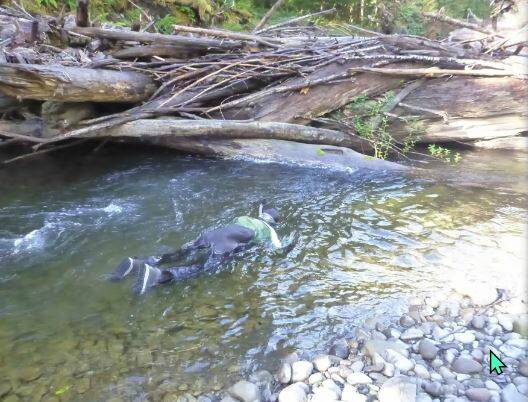

Scientists, researchers, land managers and community members gathered in Forks May 6-7 for the 8th annual Olympic Experimental State Forest Science Conference hosted by the Washington State Department of Natural Resources.
This year’s theme, “Linking Science to Natural Resource Management,” focused on how research conducted within the Olympic Experimental State Forest helps guide forest management decisions throughout the region.
Held in hybrid format, the conference featured presentations Thursday at the Rainforest Arts Center, followed by a Friday field trip to tree planting sites connected to the Type 3 Watershed Experiment.
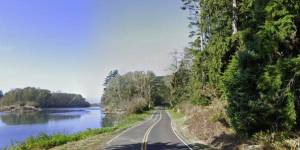
The Olympic Experimental State Forest encompasses more than 270,000 acres of working forestland on the western Olympic Peninsula. The forest serves both as a source of revenue for public trust beneficiaries and as a living laboratory for studying forest ecosystems, salmon habitat, wildlife, and sustainable forestry practices.
One of the opening presentations focused on windthrow in riparian zones, trees blown down by storms, and how slope orientation affects vulnerability. Warren Devine of DNR discussed ongoing monitoring efforts, evaluating DNR’s windthrow prediction model. Data collected from stream-adjacent forests showed southern slope trees appear more prone to windthrow than northern slope forests, though researchers continue analyzing long-term patterns.
Fish habitat and stream conditions were another major focus of the conference. Kyle Martens of DNR presented findings from riparian validation monitoring studies examining how forest buffers influence fish populations and stream temperatures.
Researchers monitoring streams in the Clearwater River drainage found water temperatures in some smaller streams appear to be decreasing. Martens noted that while shaded streams provide important cooling benefits, there are also concerns about streams becoming too dark, potentially limiting food production within aquatic ecosystems.
The studies also documented significant declines in cutthroat trout populations in some streams while others maintained higher fish densities. Researchers observed fish populations tended to be strongest in streams containing abundant woody debris and complex habitat structure.
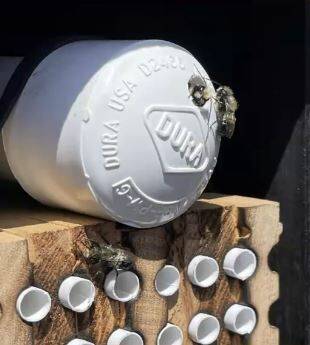
Pollinator research also drew interest during the conference. Graham Frank of Oregon State University discussed monitoring efforts involving mason bees within the T3 Watershed Experiment.
Researchers established nesting blocks for cavity-nesting pollinators and are studying how forestry practices affect pollinator habitat and foraging conditions. Frank noted increasing interest in pollinator research but said funding remains uncertain for 2026, with hopes for renewed support in 2027. He also noted that spraying practices can negatively impact pollinator foraging landscapes.
Several additional presentations focused on implementation of the Type 3 Watershed Experiment, including logging feasibility, tree planting logistics, and wildlife monitoring efforts.
Some other presentations included:
Introduction to the Type 3 Watershed Experiment with Teodora Minkova, DNR
Feasibility and Compliance of Logging Experimental Prescriptions with Emily Gardner, DNR
Tree Planting Logistics and Operational Feasibility with Nick Betz, DNR
Avian Community Responses in Successional Forest Landscapes with Gio Jacuzzi, University of Washington
Amphibian Monitoring in Experimental Watersheds with Donald Brown, U.S. Forest Service Pacific Northwest Research Station
Mammalian Responses to Forest Management Prescriptions with Rebecca McCaffery, United States Geological Survey
Conference organizers said the annual gathering is intended to connect scientific research with practical land management decisions while encouraging discussion between researchers, agencies, and the public about the future of forest management on the Olympic Peninsula.