American Elm Heritage Project Information Series:
Published 1:30 am Thursday, February 3, 2022
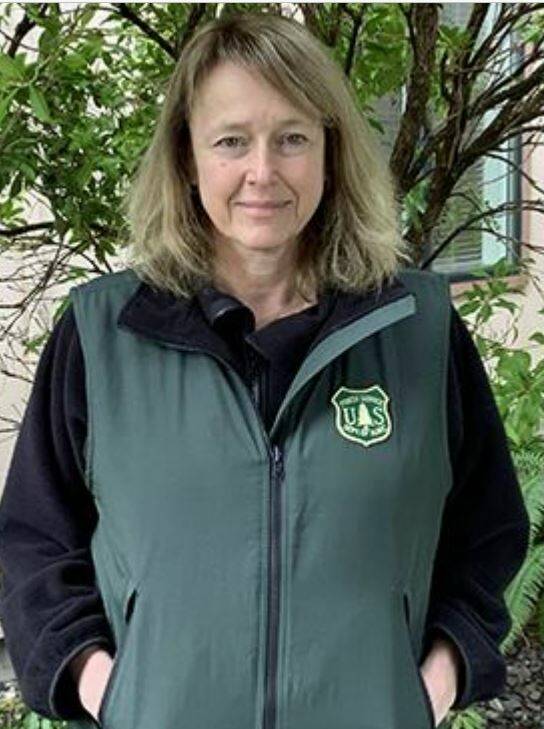
Planting and Caring for Your Tree: Meet Shirley Lorentz,
Forest Silviculturist from the
Olympic National Forest
Shirley Lorentz’s interest in trees began as a child. Her father worked for the Washington State Parks and she got a job working in the out-of-doors with the Agency as a teenager. As a young adult, she was recruited by the Forest Service to a temporary summer job where she worked for three summers doing reforestation survival surveys in eastern Washington — counting the live, planted trees inside sample plots throughout reforested areas.
Working in the forest piqued her interest in silviculture – the art and science of growing trees. Because she enjoyed working outside, she spent three summers checking on the health and survival of seedlings over thousands of acres of mountainous terrain. She measured the number of live trees, heights of seedlings, noted needle loss and discoloration, and checked for insect or animal damage. She also inspected planting techniques and found plenty of instances where two or more trees were planted in the same hole, missing seedlings, and seedlings with “J” roots. “When the planting hole is not deep enough the seedling’s root ends curve up instead of straight down, forming a “J” shape. Poorly planted seedlings often did not survive in the dry climate,” she explained.
Lorentz soon took her interest and years of experience to college at the University of Idaho where she majored in forestry. In 1989, she was hired by the Umatilla National Forest as a forestry technician working in presale and silviculture. In 2007, she was hired by the Mount Baker-Snoqualmie National Forest, working in silviculture. In 2015, she came to the Olympic National Forest and is one of three silviculturists on the forest.
Lorentz now serves on the American Elm Heritage Project’s Planning Committee.
According to Lorentz, planting and caring for a tree can be very rewarding if done correctly. “Planters should research what type of trees are best suited for their site, and what time of year is best to plant them,” she said. “The site should meet basic requirements for soil, sunlight, and space,” she added.
“Before buying a seedling or sapling, you should try to imagine what the tree will look like in 50 years and select a species suitable for your site. It is always best to consult an extension agent or nursery manager for information about fruit or ornamental trees, agricultural and non-native species,” she said. “Generally, springtime is an ideal time to plant a tree because it is prior to the growing season and provides time for the young tree to establish its root system,” she said.
Lorentz said that once you decide what and when to plant, buy a tree that comes planted in a container or ‘balled-root’ stock where roots are already in soil and wrapped in burlap because there is less chance of disturbing or drying out the small root hairs essential for delivering water to the seedling. Store the tree at low temperatures but above 32 degrees Fahrenheit, she said.
The next step is deciding where to plant, she said. “Choose a planting site that has good, loamy soil, is well-drained, has enough sunlight and enough space to grow,” Lorentz said. “Inspect the area and determine if there is enough room for the mature tree’s crown and make sure there are no underlying rock/clay layers, wires, plumbing, or other barriers to root growth,” she added.
“When it is time to plant, choose a cool day between 40-60 degrees Fahrenheit. Dig the hole with a shovel, reserving the soil nearby. Make sure your hole is as deep as the root system from the bottom of the container’s soil to the surface where the root collar is located. Make the hole a couple times wider but not deeper because you do not want to bury root collar,” Lorentz said. “Make the hole wider because you want to surround your seedling with loose soil on all sides,” she added.
“Next, lower tree into the hole, making sure the hole is the right size, and remove container. Loosen the roots gently but don’t damage them. Protect the roots from wind, sun, ice. Quickly fill the sides of the hole with lose soil. Do not let the roots dry out, and keep them as moist as possible. Water the tree and continue to water for the first growing season. Put a barrier such as fencing or netting around the tree to protect it from damage by animals or human activity,” she said.
Lorentz said that once the tree is planted, it is important to remain vigilant and carefully inspect the tree periodically for conditions of disease and pests that are native and non-native pathogens. “If you see something damaging the tree, find out what it is and what to do about it. Contact your nursery or county extension office and send a photograph of the tree to determine what is going on. The Washington State Department of Natural Resources and USDA Forest Service has pathologists and entomologists to identify and treat threats, but start by asking the nursery for help,” she said.
As the tree grows, it is important to make sure that the branches and roots do not begin to infringe on driveways, sidewalks, houses or becoming entangled with other trees, Lorentz said. “Regularly prune branches that are dead or dying, hanging over roofs, or becoming a danger to pedestrians. Hire a professional arborist to work with you to trim or prune branches,” she said.
Lorentz said that tree species such as the American chestnut, white pine and American elm have been greatly impacted by introduced pests and diseases. “If you are interested in planting tree species whose natural populations have been decimated by bacterial, fungal or viral pathogens, it is best to find nursery stock that is improved and developed to have a certain amount of resistance to those pathogens. “Clones or seed bred from the survivors of disease are generally safer to plant, and once planted, you will need to be familiar to what they might be susceptible to and be on the lookout for signs of infection,” she said. “Early detection and treatment are the keys to ensuring survival of these trees,” she added.
In the spring of 2022, ten disease-resistant American elm trees will be planted in Forks, Washington to help in the restoration of the species’ populations in the United States. The American Elm Heritage Project objective is to inform and educate citizens about the American elm, its biology and role in the American Revolution and history of the United States.
“There should be little risk to the American elm from Dutch elm disease on the North Olympic Peninsula because this area is somewhat isolated from native populations of the species and on-going infections,” Lorentz said. “But, being able to identify the European elm bark beetle and American elm bark beetle that carry the fungus and also recognize the signs of wilting caused by fungus is important. While monitoring the health and growth of these trees, professionals will take action as soon as possible to treat the trees for any threats,” she said.
For more information about planting and caring for your tree please see the Washington Department of Natural Resources brochure Planting Forest Seedlings on the American Elm Heritage Project website at: https://sites.rootsweb.com/~wamtcdar/documents/washington-department-natural-resources-planting-forest-seedlings.pdf
The Michael Trebert Chapter of the Daughters of the American Revolution (DAR) is conducting the Forks American Elm Heritage Project in 2021-22. The project is planned as part of the upcoming 250th Anniversary – in 2026 – of our nation’s founding. The project will culminate Arbor Day, April 29, 2022, with the commemorative planting of American elm saplings near Forks City Hall, and placement of an interpretive sign that describes the importance of reestablishing American elms in our nation.
Donations to support the Elm project may be made by sending a check – memo ELM — to the Michael Trebert Chapter / DAR, and mailed to P.O. Box 1917, Port Angeles, Wash. 98362.